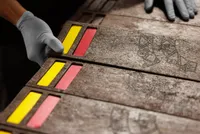


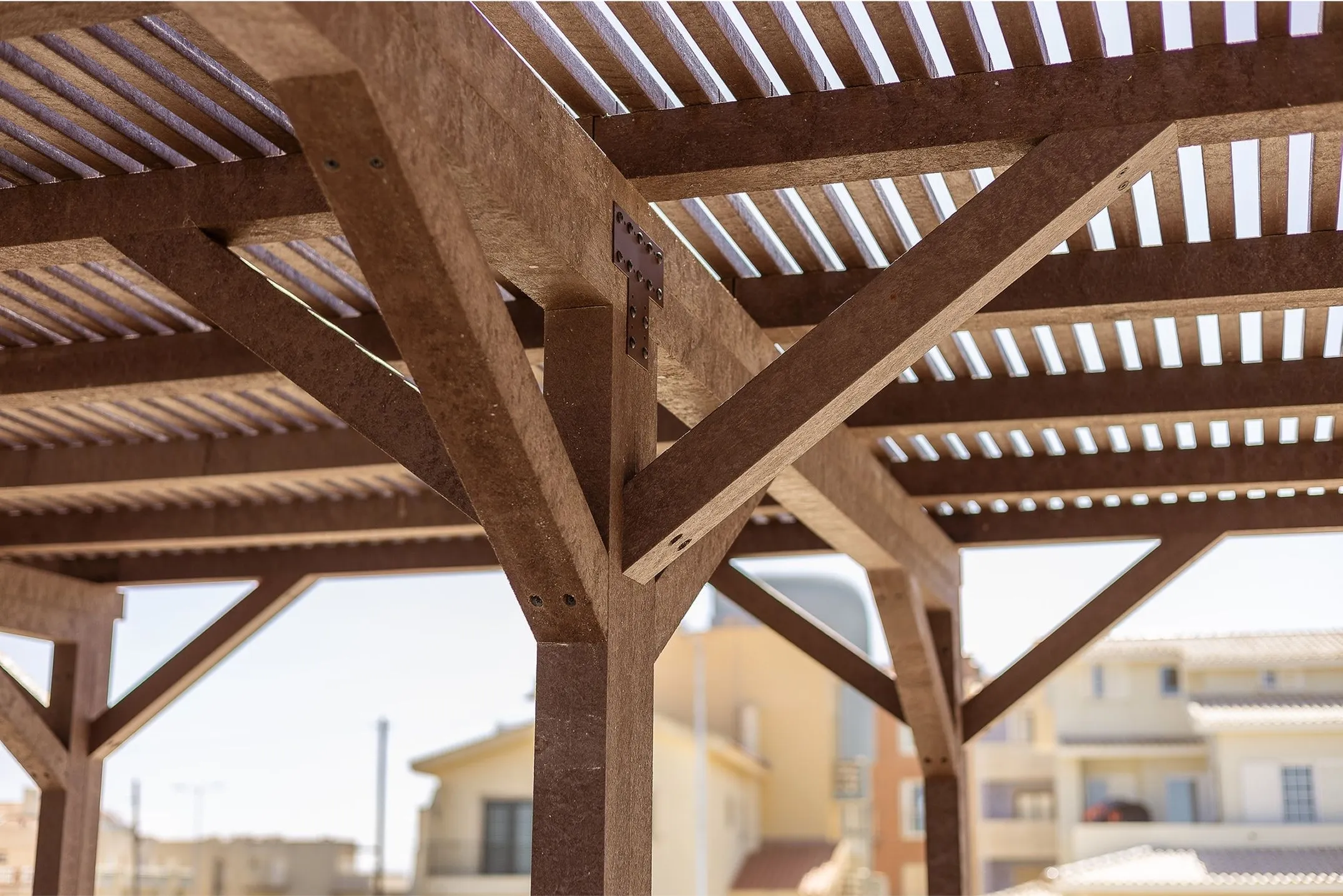
The use of recycled plastic in construction, signage and outdoor furniture responds not only to environmental responsibility but also introduces a set of technical, functional and aesthetic advantages essential for contemporary outdoor and public-space projects.
Ideal for sustainable projects
Derived exclusively from post-consumer plastic waste, recycled plastic is reintroduced as a raw material with structural performance, suitable for pergolas, viewpoints, boardwalks, outdoor furniture and signage in natural or urban environments where durability, stability and minimal maintenance are essential.
Its role is not to impose itself on the spaces, but to provide a reliable, discreet and long-lasting structure capable of supporting continuous public use. Key advantages:
- Produced from post-consumer recycled plastic;
- Versatile and functional construction material;
- High durability for outdoor environments;
- Simplified processing and installation;
- Anti-rot and anti-vandalism properties;
- Resistant to impact, abrasion and weather conditions;
- Certified non-toxic and chemically neutral;
- No maintenance required;
- Long-term visual and structural stability;
- Substitutes wood and concrete in demanding applications;
- Reduces plastic waste and pressure on natural resources.
Stability of technical and aesthetic performance under weather exposure
Outdoor resistance
Floema recycled plastic shows high resistance to demanding outdoor conditions. Its molecular structure has low water absorption, preventing swelling, rotting and internal degradation when exposed to rain or high humidity. These characteristics make it particularly suitable for humid and coastal regions.
The material demonstrates high UV resistance, maintaining colour and structural integrity under prolonged sun exposure. It withstands freezing conditions, thermal variation and repeated weather cycles, preserving dimensional stability throughout the seasons. Its predictable thermal expansion allows safe integration into architectural and structural systems.
Unlike wood or concrete, recycled plastic does not crack, splinter or erode under freeze–thaw cycles.

Viewpoint made from recycled plastic
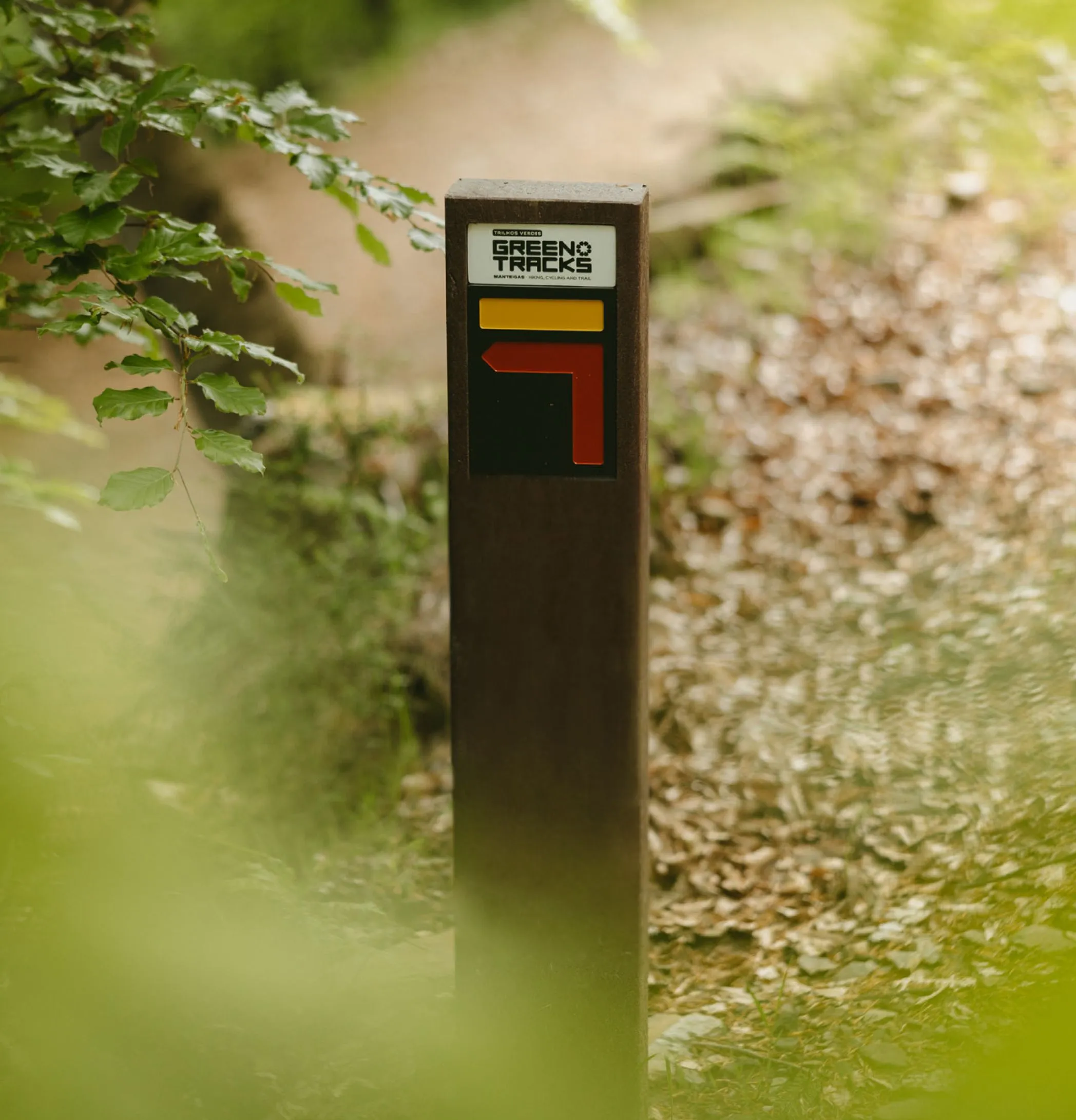
Trail marker
Construction, furniture and signage
Versatility and easy handling
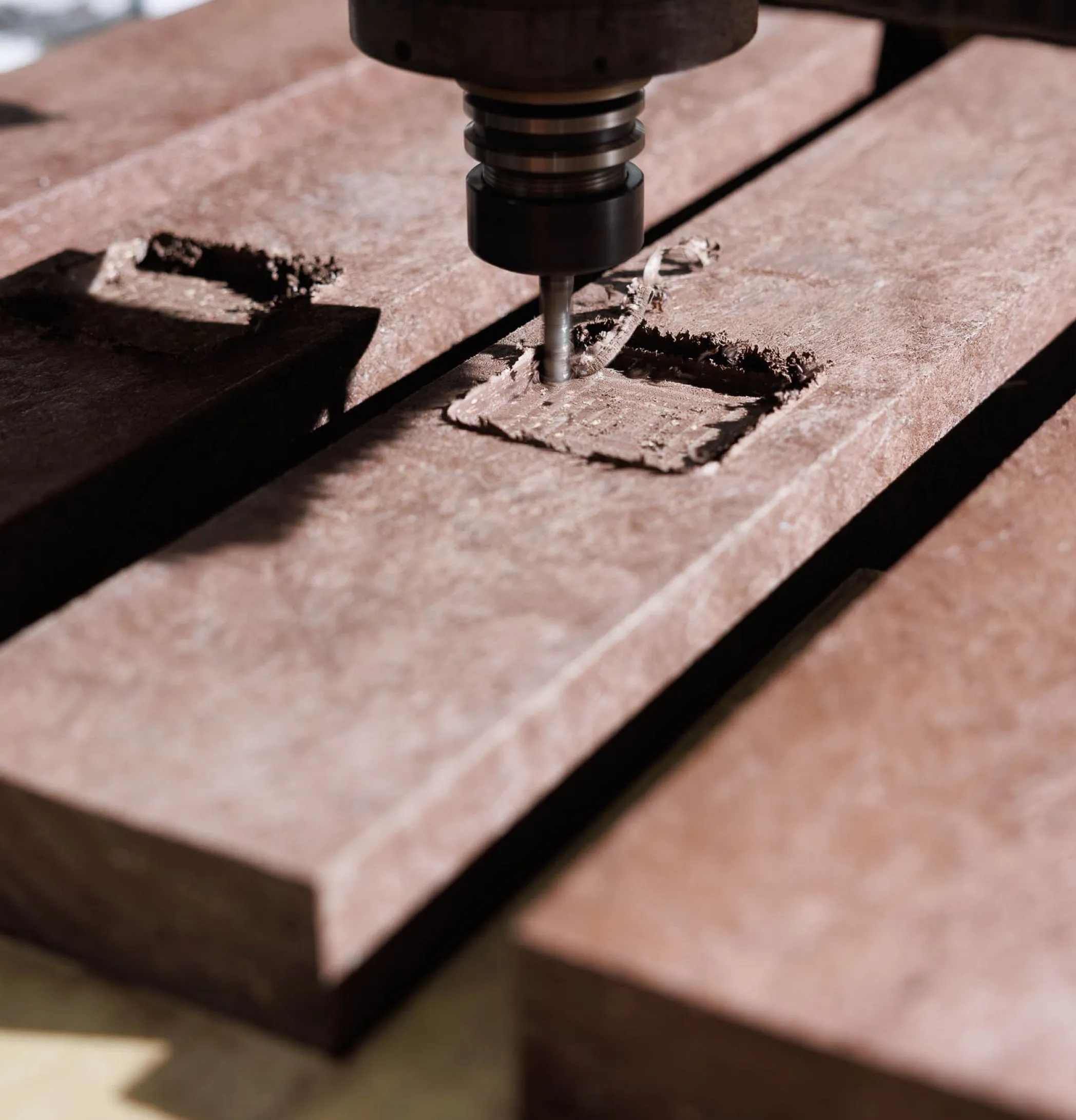
Recycled plastic can be shaped into a wide range of structural profiles and surface expressions, allowing seamless integration into different construction systems.
Within Floema applications, recycled plastic is used for:
- Custom construction solutions (pergolas, shelters, observatories)
- Boardwalks and viewpoints
- Poles and structural supports for signage
- Outdoor furniture
- Waste-management equipment
In natural and urban contexts with intensive use and low maintenance, recycled plastic is positioned as a structural alternative to wood and concrete.
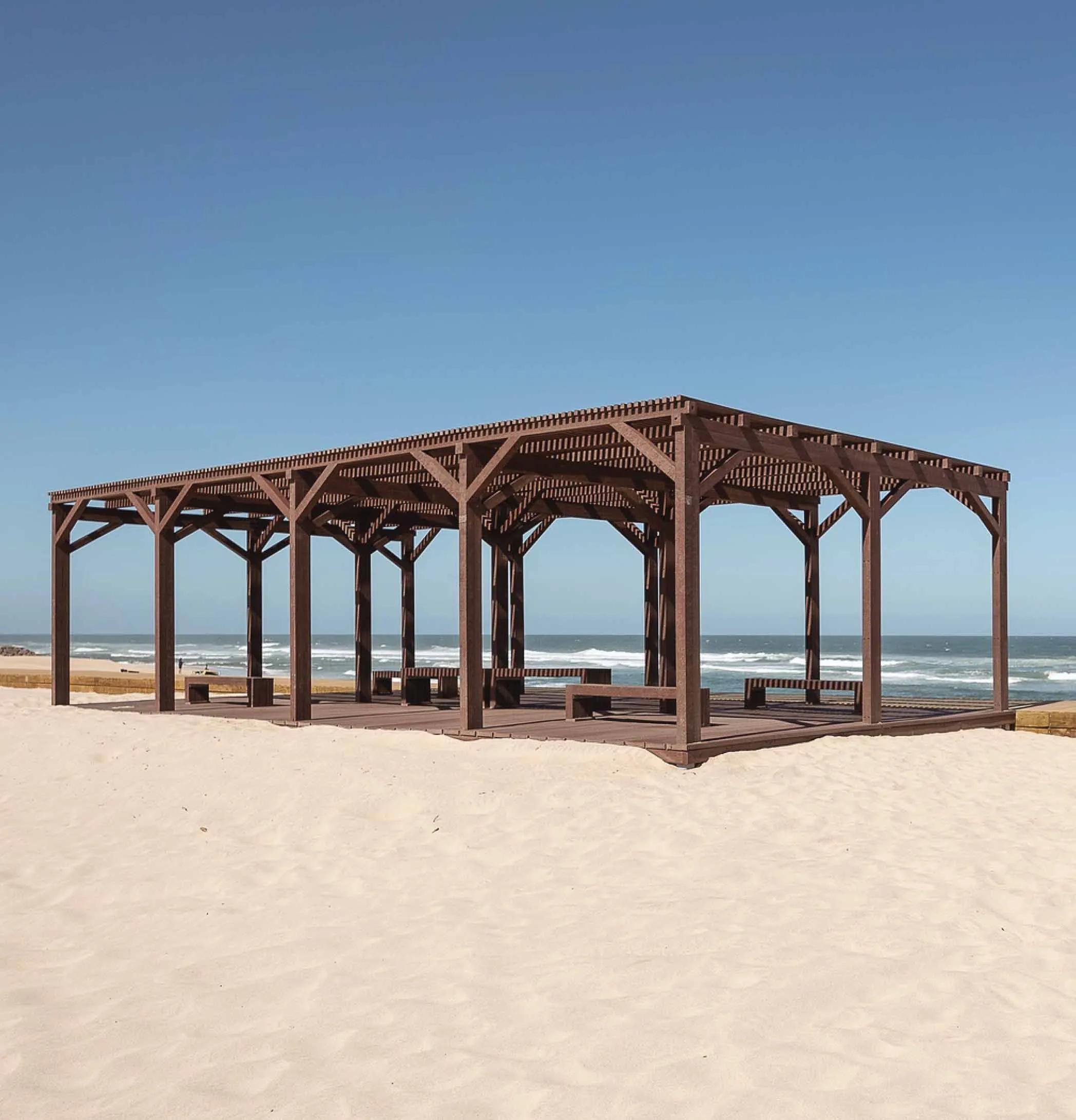
Customised pergola made from recycled plastic.

ICNF directional sign
Reliable performance in intensive applications
Stability under load and use
With a density close to that of water, recycled plastic offers a balanced combination of strength and workability. It provides high resistance to impact, shock and abrasion, making it suitable for structures subject to continuous mechanical and accidental loads.
Surface wear can be restored without compromising structural performance. Its resistance to rupture and to common chemicals such as oils and solvents expands its suitability for urban and infrastructural environments.
The absence of natural fibres eliminates vulnerability to insects, fungi and bacteria — a frequent limitation of timber structures.

ICNF interpretive display in recycled plastic.
Certified non-toxic material
A neutral presence in the environment
Recycled plastic is a non-porous, non-toxic material, certified as safe and environmentally compatible. It does not release harmful substances into soil or water, making it suitable for sensitive natural areas and public spaces.
It requires no painting, varnishing or chemical treatments to preserve its appearance or performance. Its non-reactive behaviour allows it to remain stable and visually consistent over time.

Recycled plastic bench

Circular economy excellence
From waste to structure
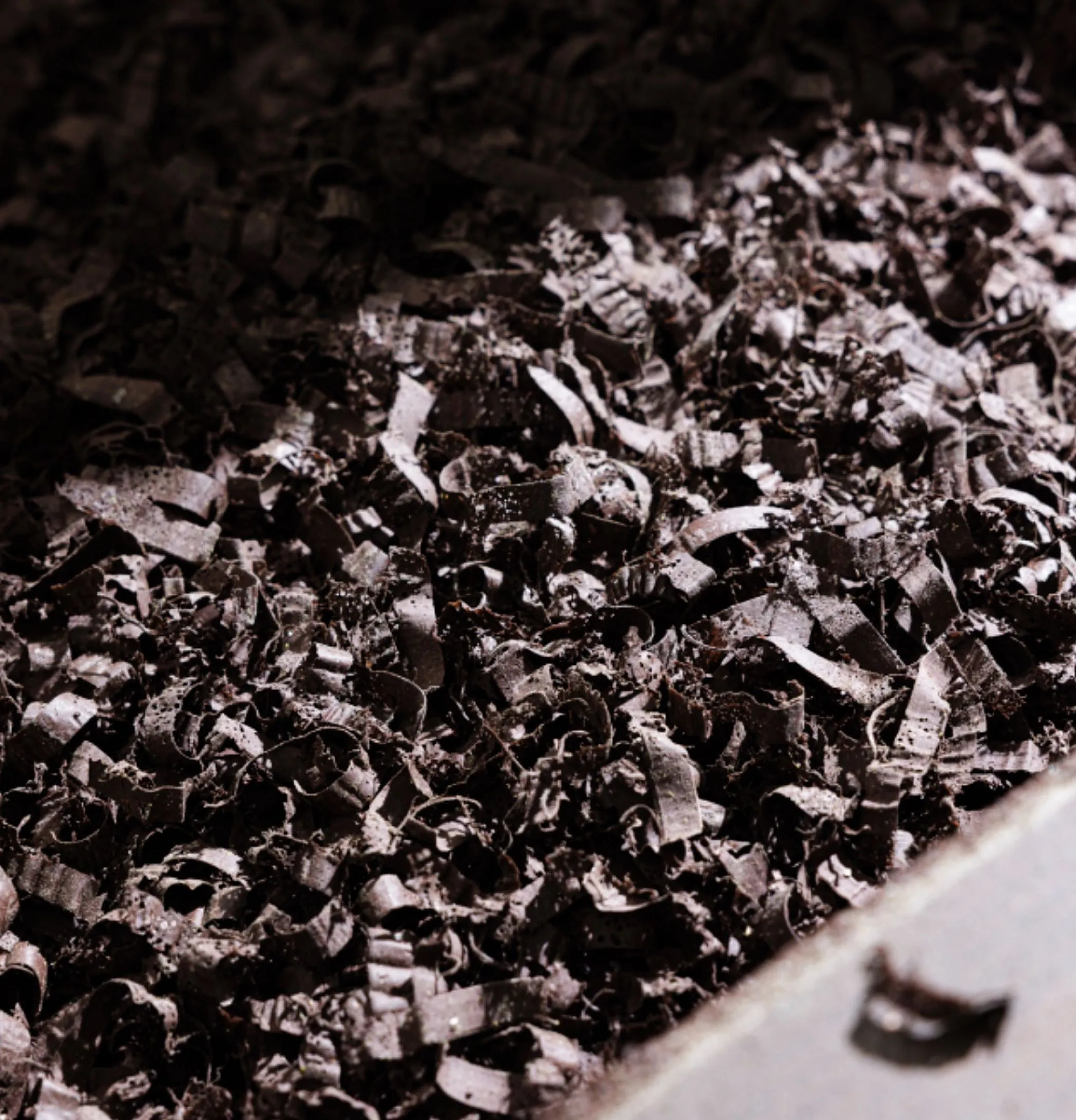
The material is produced through a controlled transformation process that begins with the sorting of post-consumer plastic waste. After cleaning and contaminant removal, the plastic is shredded, melted and reformed into new profiles and components.
This process ensures homogeneity, colour stability and structural integrity while maintaining full traceability and environmental accountability. Certified environmental and energy management systems support the manufacturing process, reinforcing the sustainable usage of resources.


Reduced consumption of natural resources
A material that replaces without depleting
By reintegrating single-use plastic waste into durable building elements, recycled plastic contributes to reducing landfill disposal and the environmental dispersion of non-biodegradable materials. At the same time, it reduces pressure on natural resources such as wood, contributing to the preservation of forest ecosystems.
It is presented not as a secondary option, but as a structural substitute — capable of ensuring performance, durability, and environmental responsibility in long-term construction processes in sensitive areas.